
Does your child hate failing? Is their fear of failure holding them back from signing up, volunteering, or dare to try something new? Are you on edge each time you introduce a new topic that you aren’t sure they’ll understand right away?
I’ve sat and prayed more than once about how to help kids who hate to fail.
While I hold a spiffy B.A. in Psychology, I’m not here to get into the nitty gritty of why your child hates failure. There isn’t one single reason it happens. Maybe you attribute it to birth order or your parenting style or their personality, but regardless it makes learning harder.
Often, children learn how to engage with failure by observing how we engage with it. I’m also not here to tell you what you’re doing wrong. Instead, here are the mindset shifts I’ve worked on cultivating in our home to help battle the discomfort surrounding imperfection.
In a hurry?
Here’s a list of resources listed in this article that have helped me reframe failure in our home!
As an Amazon Associate, I earn from qualifying purchases.
The only perfect person is Jesus.
There are really great biblical accounts proving God’s faithfulness, even when we fail. When we highlight that there was failure in these stories but God still used and redeemed the people and circumstances, our children can start to see that failure is a guaranteed part of life that we can bounce back from.
My grace is all you need. My power works best in weakness.
2 Corinthians 12:9
Here are some of my favorites:
Peter
From the start, we meet Peter fishing and we see him leave his business to follow Jesus (Matthew 4:18-20). Leaving one’s plan can be seen as failure, but following Jesus can have us back tracking, switching gears, and uprooting all kinds of plans. After following Him, time and time again, Peter failed to truly understand what Jesus was really saying (Matthew 16:21-23). Jesus continually and patiently explained the meaning and, eventually, sent the Holy Spirit to make His ways make sense (John 14:16).
Peter walked on water (a win!) and then started to sink (a fail!) when he began to worry, but Jesus was there to lift him up at the call of His name (Matthew 14:27-31). He even failed to stay true to his promise to never leave Jesus (Matthew 26:33-35). Yet, Jesus called him out of his boat, invited Peter to bring what he had, and fed him from His own plenty (John 21). He forgave Peter of everything and Peter did amazing things in service to the Lord.
Even after receiving the Holy Spirit, fellow apostle Paul had to correct Peter’s behavior at one time (Galatians 2:11-14). Some may even consider dying as a martyr as a failure, but it’s important to reinforce how untrue that is and what a victory it is to live and die for the Master of the Universe (Matthew 5:10, Matthew 10:22, Philippians 3:10, Revelation 2:10 & Revelation 12:11).
2 Timothy 2:13 is such a brilliant encapsulation of Peter’s relationship to Jesus:
If we are unfaithful, He remains faithful, for He cannot deny who He is.
2 Timothy 2:13
Discussion questions you can ask to lead them to detect the redemption themselves:
- Peter’s faith wavered when he took his eyes off Jesus and looked at the stormy water. But, because he couldn’t do it, what do we get to learn about who Jesus is?
- It can be hard to keep our promises, sometimes. Peter failed to keep his promise never to leave Jesus. Jesus already knew that Peter would be unable to keep that promise. What did Jesus do in John 21 when He saw Peter again? Did Jesus entrust Peter with any jobs or responsibilities after he failed to stay by Jesus’ side at the cross?
- Sometimes it can feel like we’ve failed if we receive correction. Paul had to correct Peter once. What good came out of that correction? What good still comes out of it now?
PAUL
Paul may look like an overachiever, but two very important aspects of his life stand out to me.
First, he was responsible for countless Christian deaths prior to repentance. I count that as a massive failure in the, “which side are you on?” department. However, that mega failure did not disqualify him from God’s plan. He was en route to fail even more when God stepped in and interrupted it all to place Paul on the right path. He could have let his failures discourage him from serving God, but instead He fell into God’s grace and became a powerhouse of edification to the gentiles!
Second, he wanted to go to Asia, like, really bad. Yet God redirected him. Some won’t see this as failure (and that’s really good!). However, those sensitive to correction and those that conflate correction or rejection of their goals as failure may experience things very differently. When the Lord blocked Paul from preaching the Word in Asia and from going to Bithynia (Acts 16:6-10), Paul could have become very discouraged or bitter.
Discussion questions you can ask:
- How did Paul’s past help him serve God?
- When Paul first met Jesus on the road to Damascus, he realized he had really messed up. Let’s read Acts 9 and Galatians 1:11-24 together. Did he immediately go out and start churches? How long did it take Paul to start going on missionary journeys?
- How would you feel if God redirected your plans like He redirected Paul’s plans to preach to Asia and Bithynia?
JONAH
Jonah fails to obey God up front, but God does not search out another messenger to share the truth. Despite running from God, when Jonah finally does the right thing, the people of an incredibly wicked city (Nineveh) repent. Lives eternally saved. That’s a huge win after a big failure. Even after being used to save so many, Jonah’s heart is bitter toward the newly repented people and he mourns God’s goodness. That failure to share in God’s joy at salvations still teaches us a lesson by showing the inward ugliness we can have when our “enemies” become our brethren.
I could keep going with examples, but you get the idea. When we read the biblical accounts of peoples’ lives, we see a ton of failure. Showing that we can trust God to redeem us and our situations when we miss the mark is a huge part of how we’ve made it safer to be a learner rather than a master at home.
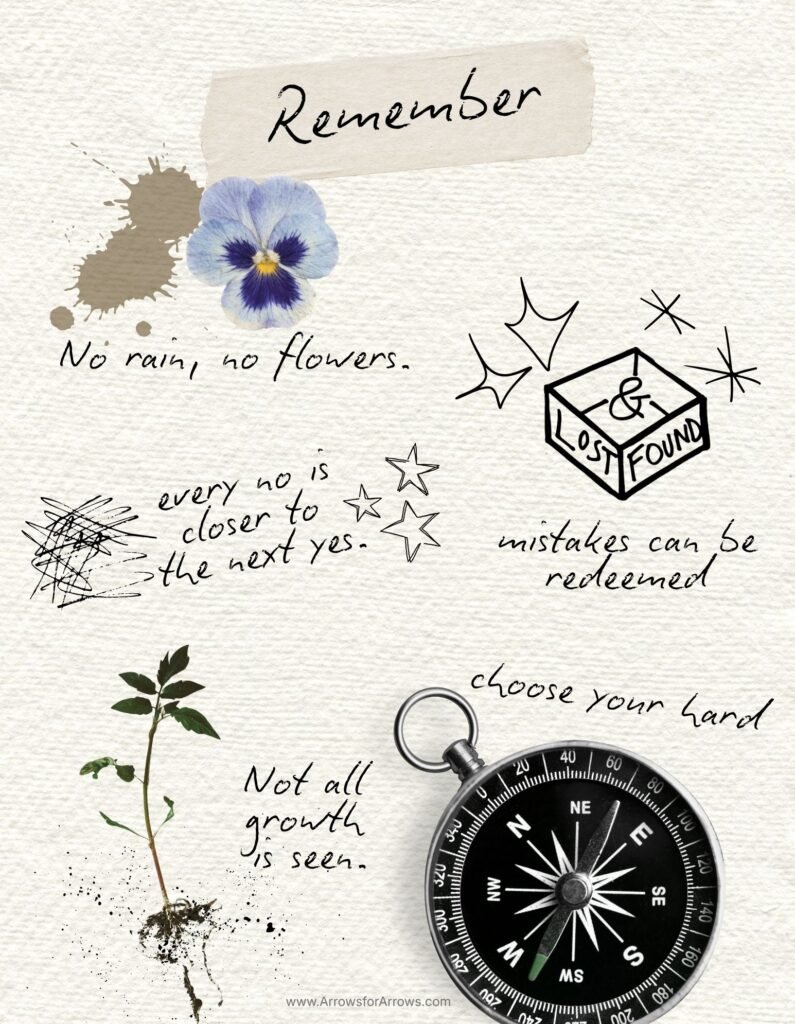
Not all growth can be seen.
This is a great way to use science to allow for imperfection.
hidden roots
Combine biology lessons about plants with biblical conversations about growth. I love giving children a way to see the root systems of plants, and a great way is a clear root viewing planter like this one. Pluck a dandelion seed from the yard and incorporate that into the mix with some of the provided seeds to guarantee they see what a tap root looks like.
For singular, larger plants that you don’t want to crowd out, try cool window sill planters like these.
The roots vary in type, and each have strengths and weaknesses that fit different preferred environments. Additionally, you can demonstrate what pruning can do to help a plant become more sturdy. Observe what happens below ground when things above ground change. Pay attention to the differences in plant size above ground versus their roots below.
In John 15:2 it says that He will prune branches that bear fruit so that they grow even more fruit. Ask your children what can prune us (ex. correction, training, pain, struggle, etc) and what good fruit might look like coming out of it (ex. strength, resilience, joy, new friends, new skills, etc.)
I have this “Not all growth is seen” wall art hanging in our homeschool nook as a visual reminder all year long.
ants
I’m not a fan of ant farms unless they have a queen. If you want a longterm project for your homeschool family, I’ve always thought an ant farm would be a cool one. I know of one place where you can buy the queens and get started in the hobby.
We watch a cool channel that shows the intricacies of their underground tunnels. It’s a perfect way to learn about ants up close in a way most of us would be unable to achieve and also see that, again, not all growth is seen “above ground.”
Every no is closer to the next yes.
A friend from college taught me this phrase while he was learning sales. He did a lot of cold calls and got a lot of nos, but he was told to look forward to the next yes that was that much closer. A single yes could pay for a ton of nos. But if he stopped in the middle of all the nos, he would be cutting himself off from a yes.
A great way to demonstrate this is with a game of hide and seek. Hide something (or have someone hide) and another child is doing the looking. As they walk around, say “hot,” “warm,” and “cold.” Start them out very far from the hidden item so they will experience a lot of “colds” before they find their goal.
Ask them after what would have happened if they had let all the “colds” discourage them from continuing to play.
Another game could be a 20-questions guessing game. You pick an animal in your mind, for example, and they can ask 20 yes or no questions (maybe 10 questions if they are older) to try and guess the right animal. You can only answer yes or no. At the end, ask them if they would have ever learned the answer if they had given up after a few “nos.”
Choose your hard.
This one has ministered to me a lot personally, and I’ve started using it in our home to help us all reflect more on what seeds we’re planting. Are we investing in God’s ways or our own? Are we moving closer or farther to goals He’s put on our hearts? How are we stewarding what He’s given us?
Treat your kids to a cool “choose your hard” sticker for their water bottle, find an inspiring movie to watch like Soul Surfer, and most importantly: be courageously (and wisely) transparent about when you’re choosing the hard in your own life.
Personal examples of this:
- One really rough day, I transparently admitted I did not want to go deal with our chickens in the rain. I looked at our daughter and said, “I really don’t want to go outside. I would rather wait until it stops raining to get the eggs. But if I wait, they will be all muddy and hard to clean. I’m going to choose my hard and do my chore while I’m tired instead of having to scrub them all later.”
- After an unexpected c-section to deliver our son, I chose to do a lot of breathing work to strengthen my core. Sometimes our daughter asks what I’m doing and I tell her I’m “choosing my hard” and working to heal my body now rather than live with a weaker body later.
- We stopped eating out as much and instead pack a lot of whole foods as snacks. One day I said, “I miss how easy it was to just stop and grab anything. But in the long run, that makes our goal of eating healthier harder. So I’m choosing my hard and putting energy into pre-meal prep instead of dealing with whatever comes from eating any and everything that’s out there.”
When our kids see us living the lessons we’re trying to teach, they start emulating it without having to “remember” the lesson we told them. It becomes second nature.
Side note: The story and work of Henry Fraser also really impacted our daughter, but I haven’t read his book to be able to recommend it. You can check out his art (which he draws with his mouth holding the supplies) and a brief biography on his website here.
No rain, no flowers.
Sometimes the things we think are inconvenient, hard, or unpleasant are exactly what we need. As children, maybe you splashed in the puddles and danced in the rain. How do we perceive rain, now? What do we model? I’ve made a habit of saying, “Yay! It’s raining! The plants must be loving this right now!” and my daughter often adds, “The animals, too! I bet they were thirsty!”
I count that as an epic homeschool win.
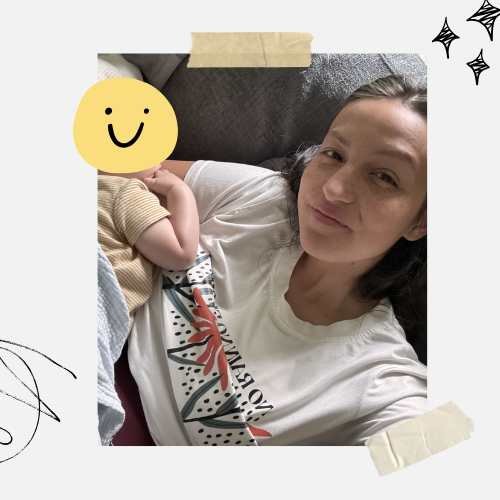
You can rock one with me by buying one here.
Mistakes can be redeemed.
One of my absolute favorite children’s books is one I came across at the Portrait Gallery in DC, entitled Beautiful Oops. It’s full of fun textures and amazing graphic design effects to show how an artistic mistake can be just what was needed to make something wonderful.
This book holds a special place in my life because it was the first book that really conveyed a message I was desperate to give our girl: you don’t need to have it all figured out from the start.
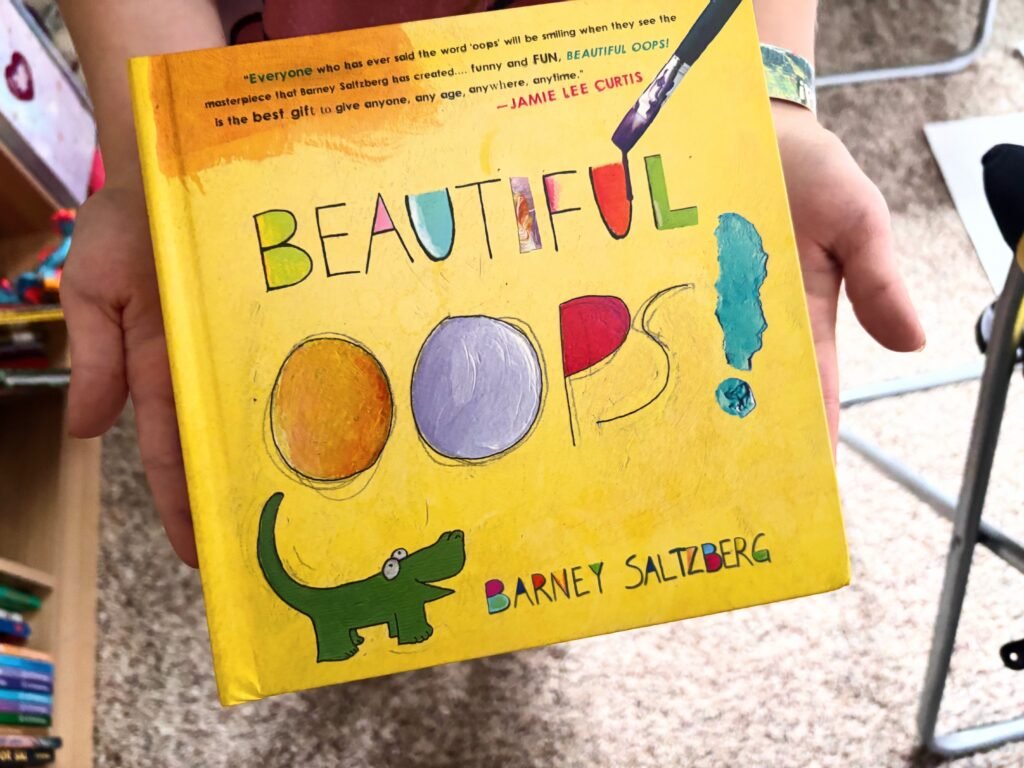
You might notice your children beating themselves up most in areas that you excel at, maybe because you make it look easy to them. This isn’t true for every child, but in our home art was sometimes fun and sometimes a high-stress mess of performance anxiety just because mama knew what she was doing.
And then came Beautiful Oops and suddenly unintentional artistic mishaps became giggle-inducing, creativity-fostering blessings.
In this same vain, I started checking out books that involve accidental discoveries and inventions.
A quick hunt on Amazon will turn up a ton, but one I enjoyed is Mistakes That Worked. What a way to show that the only way we have some amazing inventions is because someone “failed” at doing something else!
You’ll find several other books along the same lines on my Amazon Shopping List, FAILURE (For Kids Afraid to Fail).
Plant some easy wins!
We usually know what we’re planning to cover in a year. Maybe not every minutiae, but definitely major concepts. Do you sense some that your child may struggle with more than others? Brainstorm and/or research a few introductory pieces to that concept that you can weave into conversation, a game, or a mini lesson at least several weeks before you begin instructing on it. This way, your child doesn’t feel like they are coming in blind and have something to grab onto and wield with some confidence from the start.
Some of my favorite ways to weave in “easy wins” have been:
READING
BOB Books were the big star, as each book builds on the previous one to pile on the easy wins. Look over the first 1-2 books and start pointing out those words in the “wild” repeatedly so your child has at least a few words to wield before you first use the set. Additionally, I planted the concept that reading unlocks a whole new world by pointing out what sign I read to figure out answers to certain daily questions every so often before I ever even began teaching phonics or sight words to our daughter.
BASIC MATH (FRACTIONS, MONEY)
Funny enough, we started with fractions by way of food. Before I introduced the numerical values, I got her familiar with what halves, thirds, fourths, and so on looked like. I also started playing The Allowance Game (kept it from childhood!) with her on my “team” so she could help me count the money. When we played Monopoly, she was also the assistant banker just to learn what the different coins were called.
HISTORY
Have you noticed I love using games? For history, we love Timelines. It’s an easy way to start getting familiar with historical events in a fun way. We have the older version, so I do not have the “2025 Refresh” but you can find the new one here and the old ones floating around eBay. With younger kids, you can team up and make the goal to get to a certain number of historical events as a group rather than to see who can get rid of their cards first.
Since our daughter loves to read, another way to get easy history wins in early is by incorporating fun historical fiction into their library. A favorite of hers is The Imagination Station series from Focus on the Family.
Is it safe to make mistakes in your home?
My flesh and my heart may fail, but God is the strength of my heart and my portion forever.
Psalm 73:26
This one may strike a nerve. I’ve learned that we often pass on our desire to get it just right, the tension we may feel when we’re unfamiliar with something, and our cringe when a mess is made. I’ve had to go to the Lord time and time again to ask for Him to examine my heart and show me where I’m still holding onto toxic beliefs and coping mechanisms that didn’t come from Him.
When he called Peter to the shore, He told him to bring his fish but He already had fish cooking on the fire. Bring what you have, but the Lord already has prepared sustenance for you. He wants you, with all your mistakes and shortcomings and failings, to bring what you have and eat with Him. He wants you to eat what He gives you, but He will incorporate whatever you have into the feast.
The more joyful we can become at the feet of Jesus, at the table of His fish fry, maybe the more joyful our children will be to bring what they have and excitedly see what can be done with it.
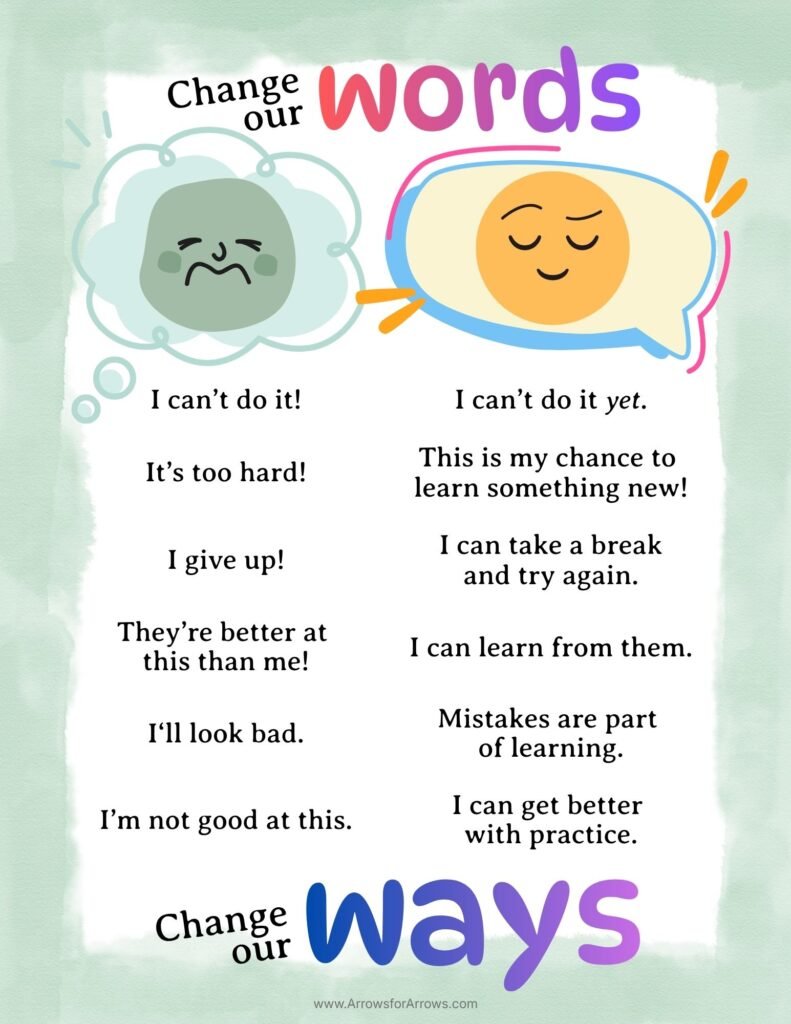
May you and yours experience many beautiful oops after beautiful oops, many hards chosen of your own accord, and unseen growth that bursts forth amazing fruit.
♡, Michelle
If you think this post is useful, it would mean a ton if you helped pass it on by sharing wherever you think it’ll help the most!







Leave a Reply
You must be logged in to post a comment.